

sixth base of mind : ค้นหาหนังสือธรรมะ หน้า 30 / 79
หน้าหนังสือทั้งหมด
99
การฝึกหยุดแรกเพื่อความมั่นคง
หยุดแรกฝึกให้มั่นคง
ให้อารมณ์สบาย ๆ มีมะะแสของความสุขครบองค์ประกอบ
ตรงนี้สำคัญ! มั่นประคองให้ดี
เป็นช่วงหัวใจ หัวต่อ
ถ้ารู้สึกเริ่มเค้น ตึง อย่าเสียใจ
เริ่มต้นใหม่ด้วยใจที่สบาย ๆ
Practice the initial
การหยุดแรกเป็นการฝึกที่สำคัญเพื่อให้จิตใจมั่นคงและมีความสุข เริ่มต้นด้วยการผ่อนคลายอารมณ์ หากรู้สึกเครียดหรือกดดัน อย่าเสียใจ ควรเริ่มต้นใหม่จากใจที่สบาย สิ่งนี้เป็นจุดเปลี่ยนที่สำคัญในการสร้างสุขภาพจ
113
Bewusstseinsfreisetzung und Entspannungstechniken
Lass alles gehen. Lass Dein Bewusstsein freudig sein, gelöst und frei von allen Sorgen. Und jetzt atme normal. Löse jeden Muskel in Deinem Körper. Beginne mit dem Lösen am obersten Punkt des Kopfes bi
Lass alles los und erfahre, wie Du Dein Bewusstsein freudig und frei von Sorgen machst. Atme normal, entspanne jeden Muskel von Kopf bis Fuß und fühle die Leichtigkeit des Seins. Erlaube Deinem Geist,
42
The Noble Eightfold Path and the Factors of Enlightenment
kings must accept with obeisance. This is because the Noble Eightfold Path is a supreme and noble practice.
2. A Wide Ocean: It can be compared to the wide ocean into which all rivers must flow. The
The Noble Eightfold Path is presented as a supreme practice in Buddhism, comparable to a vast ocean into which all rivers flow, embodying the essential Factors of Enlightenment. It comprises the Four
45
The Buddha's Teachings on Right Livelihood and Moral Conduct
the monk's equivalent of Right Livelihood, by avoiding such evils as fortune telling, sacrifices or interpreting dreams, because these are all 'low arts'[tiracchānavijjā]. The Buddha even prohibited m
This text discusses the Buddha's teachings on Right Livelihood, emphasizing the avoidance of 'low arts' such as fortune telling and the prohibition of harmful trades for monks and laypeople. In partic
86
Understanding Craving and Suffering in Buddhism
ing after such wealth, even though it is acquired by honest
means, is still subject to suffering because it contains craving which is the origin of suffering. Even the craving for the
Brahmā-world and
This text delves into the concept of craving in Buddhism, emphasizing that even honest wealth can lead to suffering due to inherent craving. It discusses how aspirations for the Brahmā-world can trap
112
Understanding the Dhamma Body and Overcoming Mental Defilements
to enslave the mind and how we can overcome them. This is a major difference from the naked (physical) eye to which the defilements are invisible. The limits of our human senses are to know the manife
The passage discusses the limitations of human senses in perceiving mental defilements such as greed, hatred, and delusion. It highlights the importance of the Dhamma Body in providing insight into th
124
Understanding the Inner Bodies and Enlightenment
the centre of the body, in the same way as described earlier, in entering the centre of the Pathama Magga Sphere, successive inner bodies can be attained, going further inside the subtle human body —
This text discusses the progression through successive inner bodies leading to the Dhammakāya, emphasizing the distinction between mundane and transcendental bodies. It highlights that all worldly bod
143
Understanding the Dhamma Body and the Noble Path
Dhamma Body — not with the human eye or the naked eye.
All the knowledge that brought him to Buddhahood came
by the ‘knowing’ of the Dhamma Body, not by rationale or
reasoning with the logical (hum
The Dhamma Body can only be perceived beyond the human eye, allowing the Buddha to grasp deep truths about existence. His compassion drove him to teach the Noble Path for the liberation of others, adv
155
King Asoka: Patron of Buddhism
by inviting 60,000 monks for alms in the palace daily. The king wanted to have the chance to pay respect to a fully-enlightened Buddha and with this end in mind, invited the Naga King to come up from
King Asoka was a pivotal figure in Buddhism, inviting 60,000 monks for daily alms and yearning to pay respect to a fully-enlightened Buddha. He invited the Naga King to appear as the Buddha for homage
173
The Wholesome Deeds of the Brahmin
Once there was a brahmin who noticed that as the monks stopped at a certain place to robe themselves before entering the town for alms, the hems of their robes would always become wet from the dew on
Once there was a brahmin who noticed that as the monks stopped at a certain place to robe themselves before entering the town for alms, the hems of their robes would always become wet from the dew on
196
The Dangers of Sensual Pleasures and Self-Mortification
1.1 Kāmasukhallikāyunāga: indulgence in the various sensual pleasures is harmful in the following ways:
1.1.1 Hino: It makes the mind coarse and clouded;
1.1.2 Gammo: (this word literally means "house
In Buddhist teachings, indulgence in sensual pleasures is deemed harmful as it clouds the mind, encourages a household life, collects defilements, and is ultimately unprofitable. Similarly, self-morti
199
The Buddha's Teachings on Reality and the Middle Way
the Buddha didn’t explain what the device was by which they could see and know according to reality, they could follow the gist of what he was explaining.
2.3 Benefits of Seeing and Knowing according
This text delves into the teachings of the Buddha regarding the benefits of seeing and knowing according to reality. Although he did not explicitly define the device for achieving this understanding,
207
The Liberation and Enlightenment of Koññña
the cosmos with its deities, Mārās and gods, with its contemplatives and priests, its royalty and commonfolk."
"O! Monks! My liberation from the Cycle of Existence is real and permanent. This is my fi
This text discusses Koññña's journey towards enlightenment through focusing his mind and understanding the Four Noble Truths. His liberation from the Cycle of Existence is emphasized, marking the sign
232
Exploration of Metaphors in Buddhist Philosophy
snake, poisonous, mistaken for rope spire, a palace - {metaphor for Mid-
- {metaphor for self-mortification dle Way 38-9} 36}
spouses, categories of 154-6
snake - {metaphor for craving 88}
sprite, ear
This text explores several metaphors used in Buddhist philosophy, including the snake as a metaphor for craving and its relationship to the concept of suffering. It further elaborates on the significa
252
Appendix F: How to Meditate
Appendix F: How to Meditate
Meditation is a state of ease, inner peace and happiness that we can bring into being, ourselves. It is a practice recommended by Buddhism for happiness, non-recklessness,
Meditation is a practice for achieving ease, inner peace, and happiness as taught in Buddhism. This technique, by Phramonkothempuni, begins with respecting the Triple Gem and taking precepts, followed
51
No Content Provided
the changes, but Luang Phaw set the foundation for
the formal teaching of meditation to the monks. Luang Phaw
was very just. He was not biased, but at the same time his
decisions were clear cut and sa
No summary available as no text was provided.
114
Untitled
danta (teeth), taco (finger/toenails) — telling the ordi-
nand to repeat them after him, first in order and then in
reverse.
All were silent. The ordinand waited for Luang
Phaw to place the yellow
N/A
139
Untitled
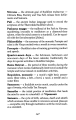
Nirvana — the ultimate goal of Buddhist endeavour — Ultimate Bliss, Eternity and True Self, release from defilements and Samsara.
Pali — the ancient Indian language used to record the scriptures of th
No summary available due to lack of content.
152
การดูแลสุขภาพจิตในยุคดิจิทัล
The basic meditation described here will lead to a deepening of happiness in life. If one doesn’t abandon the practice but cultivates meditation regularly, to the point that the sphere of Dhamma is at
ในยุคดิจิทัลที่มีความเร่งรีบ ผู้คนต้องเผชิญกับความเครียดเป็นประจำ การรู้จักวิธีการดูแลสุขภาพจิตเป็นสิ่งสำคัญ การใช้เทคโนโลยีเพื่อสนับสนุนสุขภาพจิต เช่น แอปพลิเคชันช่วยผ่อนคลาย และการเชื่อมต่อกับผู้คนร
11
Untitled
Universal Goodness : 9
There are three facts in life which are generally overlooked as follows.
1. Human Beings Are Born With No Self-Knowledge
It is rare indeed to find a human being that possesses
No summary can be generated without content.